
Clinical Physiology of Circulation
ISSN 1814-6910 (Print)
ISSN 2410-9134 (Online)


Chief Editor
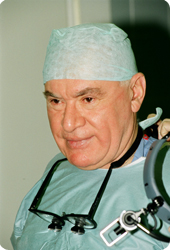
Leo A. Bockeria, MD, PhD, DSc, Professor, Academician of Russian Academy of Sciences, President of Bakoulev National Medical Research Center for Cardiovascular Surgery
Sort by
Carotid and vertebral artery aneurysms: diagnostic and treatment methods

Authors:
Company:
Bakoulev National Medical Research Center for Cardiovascular Surgery, Moscow, Russian Federation
E-mail: Сведения доступны для зарегистрированных пользователей.
DOI:
UDC: 616.133+616.134.9]-007.64
Link: Clinical Physiology of Blood Circulaiton. 2024; 21 (4): 323-331
Quote as: Bockeria L.A., Abdulgasanov R.A., Shogenov M.A. Carotid and vertebral artery aneurysms: diagnostic and treatment methods. Clinical Physiology of Circulation. 2024; 21 (4): 323–331 (in Russ.). DOI: 10.24022/1814-6910-2024-21-4-323-331
Received / Accepted: 09.10.2024 / 28.11.2024
DownloadAbstract
Carotid artery and vertebral artery aneurysms are uncommon. The symptoms of these aneurysms vary according to their location and size. Larger aneurysms may present as cervical or parapharyngeal masses, which may or may not be pulsatile or tender; there may be an associated systolic bruit. Pharyngeal hemorrhage, epistaxis, or bleeding from the ear are rare manifestations. Ischemic symptoms are a frequent mode of presentation of these aneurysms. Arterial diseases, particularly atherosclerosis, may predispose the vessel to the formation of the aneurysm. Sometimes trauma is the cause. Carotid artery aneurysms can be treated by carotid ligation or surgical reconstruction. Five distinct clinical types of aneurysms are reported with different symptoms and treatment. Fusiform, saccular, false, and mycotic aneurysms are best treated with interposition autogenous vein grafting. Spontaneous dissection aneurysms are best treated initially with anticoagulation and follow-up angiography. Recanalization is the usual result. Meticulous surgical technique to prevent perioperative emboli is essential to prevent central nervous system complications. Vertebral artery aneurysms are even rarer. And the main method of treatment is endovascular, due to the small diameter and complex surgical access.References
- Голухова Е.З. Отчет о научной и лечебной работе Национального медицинского исследовательского центра сердечно-сосудистой хирургии им. А.Н. Бакулева Минздрава России за 2022 год и перспективы дальнейшего развития Центра. Сердечно-сосудистые заболевания. Бюллетень НЦССХ им. А.Н. Бакулева РАМН. 2023; 24 (Спецвыпуск): 5–121. DOI: 10.24022/1810-0694-2023-24S
- Голухова Е.З. Отчет о научной и лечебной работе Национального медицинского исследовательского центра сердечно-сосудистой хирургии им. А.Н. Бакулева Минздрава России за 2023 год и перспективы развития. Сердечно-сосудистые заболевания. Бюллетень НЦССХ им. А.Н. Бакулева РАМН. 2024; 25 (Спецвыпуск): 5–141. DOI: 10.24022/1810-0694-2024-25S
- Jiang C., Liu J., Zhuo N., Fan Y. Successful treatment of iatrogenic internal carotid artery pseudoaneurysm following carotid endarterectomy with thrombin injection: a case report. J. Med. Case Rep. 2024; 18: 282. DOI: 10.1186/s13256-024-04606-z
- Chauhan G., Singh V., Prasad S.N., Phadke R.V., Neyaz Z. Conventional and old endovascular techniques for vertebral aneurysms still work in the era of flow diversion. Egypt. J. Neurosurg. 2024; 39: 61. DOI: 10.1186/s41984-024-00317-1
- Liu X., Guo Y., Zhang K., Yu J. Endovascular treatment of intracranial internal carotid artery bifurcation region aneurysms. Front. Neurol. 2024; 15: 1344388. DOI: 10.3389/fneur.2024.1344388
- Wang M.X., Nie Q.B. Giant cavernous aneurysms occluded by aneurysmal thrombosis, calcification, parent artery occlusion: A case report and review of literature. World J. Clin. Cases. 2024; 12 (16): 2822–2830. DOI: 10.12998/wjcc.v12.i16.2822
- Jha V.C., Jain R., Sinha V.S., Kumar N., Verma G., Dhage N. Spontaneous thrombosis and calcification of giant cavernous carotid artery aneurysm: A rare case and management insights. Surg. Neurol. Int. 2024; 15: 98. DOI: 10.25259/SNI_805_2023
- Abudula M., Axier A., Kadeer K. Operative managements of extracranial carotid artery aneurysms: a report of three cases and literature review. Chin. Neurosurg. 2018; 4: 35. DOI: 10.1186/s41016-018-0143-6
- Shotaro Ogawa, Masanori Yoshino, Takayuki Hara. Extracranial carotid artery aneurysm with myeloproliferative neoplastic cell invasion. J. Vasc. Surg. Cases Innov. Tech. 2020; 6 (2): 243–246. DOI: 10.1016/j.jvscit.2020.03.001
- Kakisis J.D., Giannakopoulos T.G., Moulakakis K., Liapis C.D. Extracranial internal carotid artery aneurysm. J. Vasc. Surg. 2014; 60: 1358. DOI: 10.1016/j.jvs.2013.09.014
- Rivera-Chavarria I.J., Alvarado-Marin J.C. Endovascular repair for an extracranial internal carotid aneurysm with cervical access: a case report. Int. J. Surg. Case Rep. 2016; 19: 14–16. DOI: 10.1016/j.ijscr.2015.11.029
- Welleweerd J.C., Nelissen B.G., Koole D., de Vries J.P., Moll F.L., Pasterkamp G. et al. Histological analysis of extracranial carotid artery aneurysms. PLoS One. 2015; 10: e0117915. DOI: 10.1371/journal.pone.0117915
- Fankhauser G.T., Stone W.M., Fowl R.J., O’Donnell M.E., Bower T.C., Meyer F.B. et al. Surgical and medical management of extracranial carotid artery aneurysms. J. Vasc. Surg. 2015; 61: 389–393. DOI: 10.1016/j.jvs.2014.07.092
- El-Sabrout R., Cooley D.A. Extracranial carotid artery aneurysms: Texas heart institute experience. J. Vasc. Surg. 2000; 31: 702–712. DOI: 10.1067/mva.2000.104101
- Mitrev Z., Jankulovski A., Bozinovska B., Hristov N. Surgical treatment of giant extracranial internal carotid artery aneurysm. J. Vasc. Surg. 2011; 54: 533. DOI: 10.1016/j.jvs.2010.06.164
- Longo G.M., Kibbe M.R. Aneurysms of the carotid artery. Semin. Vasc. Surg. 2005; 18: 178–183. DOI: 10.1053/j.semvascsurg.2005.09.002
- Yamamoto S., Akioka N., Kashiwazaki D., Koh M., Kuwayama N., Kuroda S. Surgical and endovascular treatments of extracranial carotid artery aneurysms-report of six cases. J. Stroke Cerebrovasc Dis. 2017; 26: 1481–1486. DOI: 10.1016/j.jstrokecerebrovasdis.2017.03.009
- Attigah N., Kulkens S., Zausig N., Hansmann J., Ringleb P., Hakimi M. et al. Surgical therapy of extracranial carotid artery aneurysms: long- term results over a 24-year period. Eur. J. Vasc. Endovasc. Surg. 2009; 37: 127–133. DOI: 10.1016/j.ejvs.2008.10.020
- Radak D., Davidovic L., Vukobratov V., Ilijevski N., Kostic D., Maksimovic Z. et al. Carotid artery aneurysms: Serbian multicentric study. Ann. Vasc. Surg. 2007; 21: 23–29. DOI: 10.1016/j.avsg.2006.10.004
- Welleweerd J.C., den Ruijter H.M., Nelissen B.G., Bots M.L., Kappelle L.J., Rinkel G.J. et al. Management of extracranial carotid artery aneurysm. Eur. J. Vasc. Endovasc. Surg. 2015; 50: 141–147. DOI: 10.1016/j.ejvs.2015.05.002
- Welleweerd J.C., Moll F.L., de Borst G.J. Technical options for the treatment of extracranial carotid aneurysms. Expert Rev. Cardiovasc. Ther. 2012; 10: 925–931. DOI: 10.1586/erc.12.61
- Ghilardi G., Massetto N., Cattalini C., Odero A., De Monti M., Gobatti D. et al. Brain involvement in extracranial internal carotid artery aneurysms. Vasa. 2001; 30: 37–41. DOI: 10.1024/0301-1526.30.1.37
- Garg K., Rockman C.B., Lee V., Maldonado T.S., Jacobowitz G.R., Adelman M.A. et al. Presentation and management of carotid artery aneurysms and pseudoaneurysms. J. Vasc. Surg. 2012; 55: 1618–1622. DOI: 10.1016/j.jvs.2011.12.054
- McCann R.L. Basic data related to peripheral artery aneurysms. Ann. Vasc. Surg. 1990; 4: 411–414. DOI: 10.1007/bf02000509
- Bellosta R., Sesana M., Baglini R., Luzzani L., Talarico M., Sarcina A. Endovascular treatment of a symptomatic carotid artery aneurysm with a stent graft. Vasc. Endovasc. Surg. 2008; 42: 276–278. DOI: 10.1177/1538574407312650
- Huyzer M., Reijnen M.M., Sybrandy J.E., Buth J., Zeebregts C.J. Interposition grafting of large extracranial carotid aneurysm. Tex. Heart Inst. J. 2011; 38: 52–55.
- Zhou W., Lin P.H., Bush R.L., Peden E., Guerrero M.A., Terramani T. et al. Carotid artery aneurysm: evolution of management over two decades. J. Vasc. Surg. 2006; 43: 493–496; disc. 497. DOI: 10.1016/j.jvs.2005.11.023
- Alaraj A., Wallace A., Amin-Hanjani S., Charbel F.T., Aletich V. Endovascular implantation of covered stents in the extracranial carotid and vertebral arteries: case series and review of the literature. Surg. Neurol. Int. 2011; 2: 67. DOI: 10.1177/1526602814566405
- Welleweerd J.C., de Borst G.J., de Groot D., van Herwaarden J.A., Lo R.T., Moll F.L. Bare metal stents for treatment of extracranial internal carotid artery aneurysms: long-term results. J. Endovasc. Ther. 2015; 22: 130–134. DOI: 10.1177/1526602814566405
- Chang F.C., Lirng J.F., Luo C.B., Guo W.Y., Teng M.M., Tai S.K. et al. Carotid blowout syndrome in patients with head-and-neck cancers: reconstructive management by self-expandable stent-grafts. Am. J. Neuroradiol. 2007; 28: 181–188.
- Geyik S., Yavuz K., Yurttutan N., Saatci I., Cekirge H.S. Stent-assisted coiling in endovascular treatment of 500 consecutive cerebral aneurysms with long-term follow-up. Am. J. Neuroradiol. 2013; 34: 2157–2162. DOI: 10.3174/ajnr.a3574
- Chalouhi N., Tjoumakaris S., Dumont A.S., Gonzalez LF., Randazzo C., Starke R.M. et al. Treatment of posterior circulation aneurysms with the pipeline embolization device. Neurosurgery. 2013; 72: 883–889. DOI: 10.1227/neu.0b013e31828ba984
- Lanzino G., Crobeddu E., Cloft H.J., Hanel R., Kallmes D.F. Efficacy and safety of flow diversion for paraclinoid aneurysms: a matched-pair analysis compared with standard endovascular approaches. Am. J. Neuroradiol. 2012; 33: 2158–2161. DOI: 10.3174/ajnr.a3207
- Miyachi S., Hiramatsu R., Ohnishi H., Yagi R., Kuroiwa T. Usefulness of the pipeline embolic device for large and giant carotid cavernous aneurysms. Neurointervention. 2017; 12: 83–90. DOI: 10.5469/neuroint.2017.12.2.83
- Becske T., Brinjikji W., Potts M.B., Kallmes D.F., Shapiro M., Moran C.J. et al. Long-term clinical and angiographic outcomes following pipeline embolization device treatment of complex internal carotid artery aneurysms: five-year results of the pipeline for uncoilable or failed aneurysms trial. Neurosurgery. 2017; 80: 40–48. DOI: 10.1093/neuros/nyw014
- Kallmes D.F., Hanel R., Lopes D., Boccardi E., Bonafe A., Cekirge S. et al. International retrospective study of the pipeline embolization device: a multicenter aneurysm treatment study. Am. J. Neuroradiol. 2015; 36: 108–115. DOI: 10.3174/ajnr.a4111
- Li M.H., Li Y.D., Gao B.L., Fang C., Luo Q.Y., Cheng Y.S. et al. A new covered stent designed for intracranial vasculature: application in the management of >pseudoaneurysms of the cranial internal carotid artery. Am. J. Neuroradiol. 2007; 28: 1579–1585. DOI: 10.3174/ajnr.a0668
- Li Z., Chang G., Yao C., Guo L., Liu Y., Wang M. et al. Endovascular stenting of extracranial carotid artery aneurysm: a systematic review. Eur. J. Vasc. Endovasc. Surg. 2011; 42: 419–426. DOI: 10.1016/j.ejvs.2011.05.008
- Golukhova E.Z. Report on the scientific and clinical activity of Bakoulev National Medical Research Center for Cardiovascular Surgery for 2022 and development prospects of the Center. The Bulletin of Bakoulev Center. Cardiovascular Diseases. 2023; 24 (Special Issue) (in Russ.). DOI: 10.24022/1810-0694-2023-24S
- Golukhova E.Z. Report on the scientific and clinical activity of Bakoulev National Medical Research Center for Cardiovascular Surgery for 2023 and development prospects. The Bulletin of Bakoulev Center. Cardiovascular Diseases. 2024; 25 (Special Issue) (in Russ.). DOI: 10.24022/1810-0694-2024-25S
- Jiang C., Liu J., Zhuo N., Fan Y. Successful treatment of iatrogenic internal carotid artery pseudoaneurysm following carotid endarterectomy with thrombin injection: a case report. J. Med. Case Rep. 2024; 18: 282. DOI: 10.1186/s13256-024-04606-z
- Chauhan G., Singh V., Prasad S.N., Phadke R.V., Neyaz Z. Conventional and old endovascular techniques for vertebral aneurysms still work in the era of flow diversion. Egypt. J. Neurosurg. 2024; 39: 61. DOI: 10.1186/s41984-024-00317-1
- Liu X., Guo Y., Zhang K., Yu J. Endovascular treatment of intracranial internal carotid artery bifurcation region aneurysms. Front. Neurol. 2024; 15: 1344388. DOI: 10.3389/fneur.2024.1344388
- Wang M.X., Nie Q.B. Giant cavernous aneurysms occluded by aneurysmal thrombosis, calcification, parent artery occlusion: A case report and review of literature. World J. Clin. Cases. 2024; 12 (16): 2822–2830. DOI: 10.12998/wjcc.v12.i16.2822
- Jha V.C., Jain R., Sinha V.S., Kumar N., Verma G., Dhage N. Spontaneous thrombosis and calcification of giant cavernous carotid artery aneurysm: A rare case and management insights. Surg. Neurol. Int. 2024; 15: 98. DOI: 10.25259/SNI_805_2023
- Abudula M., Axier A., Kadeer K. Operative managements of extracranial carotid artery aneurysms: a report of three cases and literature review. Chin. Neurosurg. 2018; 4: 35. DOI: 10.1186/s41016-018-0143-6
- Shotaro Ogawa, Masanori Yoshino, Takayuki Hara. Extracranial carotid artery aneurysm with myeloproliferative neoplastic cell invasion. J. Vasc. Surg. Cases Innov. Tech. 2020; 6 (2): 243–246. DOI: 10.1016/j.jvscit.2020.03.001
- Kakisis J.D., Giannakopoulos T.G., Moulakakis K., Liapis C.D. Extracranial internal carotid artery aneurysm. J. Vasc. Surg. 2014; 60: 1358. DOI: 10.1016/j.jvs.2013.09.014
- Rivera-Chavarria I.J., Alvarado-Marin J.C. Endovascular repair for an extracranial internal carotid aneurysm with cervical access: a case report. Int. J. Surg. Case Rep. 2016; 19: 14–16. DOI: 10.1016/j.ijscr.2015.11.029
- Welleweerd J.C., Nelissen B.G., Koole D., de Vries J.P., Moll F.L., Pasterkamp G. et al. Histological analysis of extracranial carotid artery aneurysms. PLoS One. 2015; 10: e0117915. DOI: 10.1371/journal.pone.0117915
- Fankhauser G.T., Stone W.M., Fowl R.J., O’Donnell M.E., Bower T.C., Meyer F.B. et al. Surgical and medical management of extracranial carotid artery aneurysms. J. Vasc. Surg. 2015; 61: 389–393. DOI: 10.1016/j.jvs.2014.07.092
- El-Sabrout R., Cooley D.A. Extracranial carotid artery aneurysms: Texas heart institute experience. J. Vasc. Surg. 2000; 31: 702–712. DOI: 10.1067/mva.2000.104101
- Mitrev Z., Jankulovski A., Bozinovska B., Hristov N. Surgical treatment of giant extracranial internal carotid artery aneurysm. J. Vasc. Surg. 2011; 54: 533. DOI: 10.1016/j.jvs.2010.06.164
- Longo G.M., Kibbe M.R. Aneurysms of the carotid artery. Semin. Vasc. Surg. 2005; 18: 178–183. DOI: 10.1053/j.semvascsurg.2005.09.002
- Yamamoto S., Akioka N., Kashiwazaki D., Koh M., Kuwayama N., Kuroda S. Surgical and endovascular treatments of extracranial carotid artery aneurysms-report of six cases. J. Stroke Cerebrovasc Dis. 2017; 26: 1481–1486. DOI: 10.1016/j.jstrokecerebrovasdis.2017.03.009
- Attigah N., Kulkens S., Zausig N., Hansmann J., Ringleb P., Hakimi M. et al. Surgical therapy of extracranial carotid artery aneurysms: long- term results over a 24-year period. Eur. J. Vasc. Endovasc. Surg. 2009; 37: 127–133. DOI: 10.1016/j.ejvs.2008.10.020
- Radak D., Davidovic L., Vukobratov V., Ilijevski N., Kostic D., Maksimovic Z. et al. Carotid artery aneurysms: Serbian multicentric study. Ann. Vasc. Surg. 2007; 21: 23–29. DOI: 10.1016/j.avsg.2006.10.004
- Welleweerd J.C., den Ruijter H.M., Nelissen B.G., Bots M.L., Kappelle L.J., Rinkel G.J. et al. Management of extracranial carotid artery aneurysm. Eur. J. Vasc. Endovasc. Surg. 2015; 50: 141–147. DOI: 10.1016/j.ejvs.2015.05.002
- Welleweerd J.C., Moll F.L., de Borst G.J. Technical options for the treatment of extracranial carotid aneurysms. Expert Rev. Cardiovasc. Ther. 2012; 10: 925–931. DOI: 10.1586/erc.12.61
- Ghilardi G., Massetto N., Cattalini C., Odero A., De Monti M., Gobatti D. et al. Brain involvement in extracranial internal carotid artery aneurysms. Vasa. 2001; 30: 37–41. DOI: 10.1024/0301-1526.30.1.37
- Garg K., Rockman C.B., Lee V., Maldonado T.S., Jacobowitz G.R., Adelman M.A. et al. Presentation and management of carotid artery aneurysms and pseudoaneurysms. J. Vasc. Surg. 2012; 55: 1618–1622. DOI: < a href="https://doi.org/10.1016/j.jvs.2011.12.054">10.1016/j.jvs.2011.12.054
- McCann R.L. Basic data related to peripheral artery aneurysms. Ann. Vasc. Surg. 1990; 4: 411–414. DOI: 10.1007/bf02000509
- Bellosta R., Sesana M., Baglini R., Luzzani L., Talarico M., Sarcina A. Endovascular treatment of a symptomatic carotid artery aneurysm with a stent graft. Vasc. Endovasc. Surg. 2008; 42: 276–278. DOI: 10.1177/1538574407312650
- Huyzer M., Reijnen M.M., Sybrandy J.E., Buth J., Zeebregts C.J. Interposition grafting of large extracranial carotid aneurysm. Tex. Heart Inst. J. 2011; 38: 52–55.
- Zhou W., Lin P.H., Bush R.L., Peden E., Guerrero M.A., Terramani T. et al. Carotid artery aneurysm: evolution of management over two decades. J. Vasc. Surg. 2006; 43: 493–496; disc. 497. DOI: 10.1016/j.jvs.2005.11.023
- Alaraj A., Wallace A., Amin-Hanjani S., Charbel F.T., Aletich V. Endovascular implantation of covered stents in the extracranial carotid and vertebral arteries: case series and review of the literature. Surg. Neurol. Int. 2011; 2: 67. DOI: 10.1177/1526602814566405
- Welleweerd J.C., de Borst G.J., de Groot D., van Herwaarden J.A., Lo R.T., Moll F.L. Bare metal stents for treatment of extracranial internal carotid artery aneurysms: long-term results. J. Endovasc. Ther. 2015; 22: 130–134. DOI: 10.1177/1526602814566405
- Chang F.C., Lirng J.F., Luo C.B., Guo W.Y., Teng M.M., Tai S.K. et al. Carotid blowout syndrome in patients with head-and-neck cancers: reconstructive management by self-expandable stent-grafts. Am. J. Neuroradiol. 2007; 28: 181–188.
- Geyik S., Yavuz K., Yurttutan N., Saatci I., Cekirge H.S. Stent-assisted coiling in endovascular treatment of 500 consecutive cerebral aneurysms with long-term follow-up. Am. J. Neuroradiol. 2013; 34: 2157–2162. DOI: 10.3174/ajnr.a3574
- Chalouhi N., Tjoumakaris S., Dumont A.S., Gonzalez LF., Randazzo C., Starke R.M. et al. Treatment of posterior circulation aneurysms with the pipeline embolization device. Neurosurgery. 2013; 72: 883–889. DOI: 10.1227/neu.0b013e31828ba984
- Lanzino G., Crobeddu E., Cloft H.J., Hanel R., Kallmes D.F. Efficacy and safety of flow diversion for paraclinoid aneurysms: a matched-pair analysis compared with standard endovascular approaches. Am. J. Neuroradiol. 2012; 33: 2158–2161. DOI: 10.3174/ajnr.a3207
- Miyachi S., Hiramatsu R., Ohnishi H., Yagi R., Kuroiwa T. Usefulness of the pipeline embolic device for large and giant carotid cavernous aneurysms. Neurointervention. 2017; 12: 83–90. DOI: 10.5469/neuroint.2017.12.2.83
- Becske T., Brinjikji W., Potts M.B., Kallmes D.F., Shapiro M., Moran C.J. et al. Long-term clinical and angiographic outcomes following pipeline embolization device treatment of complex internal carotid artery aneurysms: five-year results of the pipeline for uncoilable or failed aneurysms trial. Neurosurgery. 2017; 80: 40–48. DOI: 10.1093/neuros/nyw014
- Kallmes D.F., Hanel R., Lopes D., Boccardi E., Bonafe A., Cekirge S. et al. International retrospective study of the pipeline embolization device: a multicenter aneurysm treatment study. Am. J. Neuroradiol. 2015; 36: 108–115. DOI: 10.3174/ajnr.a4111
- Li M.H., Li Y.D., Gao B.L., Fang C., Luo Q.Y., Cheng Y.S. et al. A new covered stent designed for intracranial vasculature: application in the management of >pseudoaneurysms of the cranial internal carotid artery. Am. J. Neuroradiol. 2007; 28: 1579–1585. DOI: 10.3174/ajnr.a0668
- Li Z., Chang G., Yao C., Guo L., Liu Y., Wang M. et al. Endovascular stenting of extracranial carotid artery aneurysm: a systematic review. Eur. J. Vasc. Endovasc. Surg. 2011; 42: 419–426. DOI: 10.1016/j.ejvs.2011.05.008
If you found mistakes, select text and press Alt+A