
Clinical Physiology of Circulation
ISSN 1814-6910 (Print)
ISSN 2410-9134 (Online)


Chief Editor
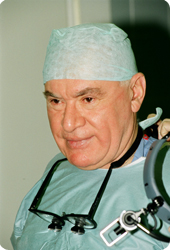
Leo A. Bockeria, MD, PhD, DSc, Professor, Academician of Russian Academy of Sciences, President of Bakoulev National Medical Research Center for Cardiovascular Surgery
Sort by
Central hemodynamics in off-pump coronary artery bypass operations

Authors:
Company:
Bakoulev National Medical Research Center for Cardiovascular Surgery, Moscow, Russian Federation
E-mail: Сведения доступны для зарегистрированных пользователей.
DOI:
UDC: 616.132.2-089]:612.13
Link: Clinical Physiology of Blood Circulaiton. 2022; 3 (19): 257-265
Quote as: Khinchagov D.Ya., Rybka M.M., Golubev E.P., Mumladze K.V. Central hemodynamics in off-pump coronary artery bypass operations. Clinical Physiology of Circulation. 2022; 19 (3): 257–65 (in Russ.). DOI: 10.24022/1814-6910-2022-19-3-257-265
Received / Accepted: 14.07.2022 / 01.09.2022
DownloadAbstract
Objective. Assess changes in hemodynamic parameters and vascular tone during coronary artery bypass grafting when positioning and bypassing the target artery during OPCAB. Selection of the optimal profile of cardiotonic support and infusion therapy, which allows minimizing hemodynamic instability.
Material and methods. A prospective study of 36 patients who underwent a primary elective OPCAB for coronary artery disease. The state of central hemodynamics was studied using a Swan-Ganz catheter. The selection of vasopressor, cardiotonic support and infusion therapy was carried out based on indicators of central hemodynamics.
Results. According to the results of our study, when bypassing the arteries of the anterior wall of the heart, there is a slight decrease in the cardiac index (CI) (from 2.5 to 2.1 l/min/m2) and a statistically significant decrease in stroke volume (SV) (from 80 to 64), while pulmonary capillary wedge pressure (PCWP) slightly increases, which indicates a significant development of hypokinesis with shunting of the anterior wall of the myocardium. When shunting the arteries of the lateral wall of the myocardium, there is a statistically significant decrease in SI, due to a decrease in the preload of the left ventricle, as evidenced by a statistically significant decrease in SV and a decrease in PCWP. When shunting the artery of the posterior wall of the heart, there is also a decrease in CI, SV, PCWP and a statistically significant increase in CVP, due to significant compression of the right ventricle.
Conclusion. Changes in central hemodynamic parameters obtained by the thermodilution method during heart positioning and coronary artery bypass grafting against the background of impaired filling processes of the heart chambers and transient myocardial ischemia are important for the successful implementation of OPCAB. Correction of hemodynamics with cardiotonic support, infusion therapy and Trendelenburg position allow for stable hemodynamics with improved visualization when positioning the heart for bypass of target coronary arteries and promote complete myocardial revascularization.
References
- Davierwala P.M. Current outcomes of off-pump coronary artery bypass grafting: evidence from real world practice. Journal of Thoracic Disease. 2016; 8: 772–86. DOI: 10.21037/jtd.2016.10.102
- Shaefi S., Mittel A., Loberman D., Ramakrishna H. Off-pump versus on-pump coronary artery bypass grafting-a systematic review and analysis of clinical outcomes. Journal of Cardiothoracic and Vascular Anesthesia. 2019; 33 (1): 232–44. DOI: 10.1053/j.jvca. 2018.04.012
- Moutlana H.J. Off pump coronary artery bypass graft. Southern African Journal of Anaesthesia and Analgesia. 2018; 24 (3): 86–9.
- Бокерия Л.А., Авалиани В.М., Мерзляков В.Ю. Аортокоронарное шунтирование на работающем сердце. М.: НЦССХ им. А.Н. Бакулева РАМН; 2008.
- Ammannaya G.K.K., Basantwani S., Mishra P., Khandekar J.V. Effect of octopus tissue stabilizer on cardiac output during off-pump coronary artery bypass graft surgery. Kardiochir. Torakochirurgia Pol. 2019; 16 (2): 69–73. DOI: 10.5114/kitp.2019.86358
- Hett D.A. Anaesthesia for off-pump coronary artery surgery. CEACCP. 2006; 6 (2): 60–2. DOI: 10.1093/bjaceaccp/mkl005
- Parissis H., Mbarushimana S., Ramesh B.C., Parissis M., Lampridis S., Mhandu P. et al. The impact of off-pump surgery in end-organ function: practical end-points. J. Cardiothorac. Surg. 2015; 10: 159. DOI: 10.1186/s13019-015-0362-2
- Chassot P.G., van der Linden P., Zaugg M., Mueller X.M., Spahn D.R. Off-pump coronary artery bypass surgery: physiology and anaesthetic management. Br. J. Anaesth. 2004; 92 (3): 400–13. DOI: 10.1093/bja/aeh064
- Хинчагов Д.Я., Рогальская Е.А., Голубев Е.П., Рыбка М.М., Самсонова Н.Н., Ворожка И.В. и др. Периоперационная динамика концентрации предсердного натрийуретического пептида у пациентов, перенесших реваскуляризацию миокарда без применения искусственного кровообращения. Сердечно-сосудистые заболевания. Бюллетень НЦССХ им А.Н. Бакулева РАМН. 2018; 19 (S6): 175.
- George S.J., Al-Ruzzeh S., Amrani M. Mitral annulus distortion during beating heart surgery: A potential cause for hemodynamic disturbance-a three-dimensional echocardiography reconstruction study. Ann. Thorac. Surg. 2002;. 73; 1424–30. DOI: 10.1016/s0003-4975(02)03406-9
- Moodley S. OPCAB The Secrets of the Beating Heart. University of KwaZulu-Natal, Durban; 2015.
- Carvalho A.R., Guizilini S., Murai G.M., Begot I., Rocco I.S., Hossne N.A. Jr et al. Hemodynamic changes during heart displacement in aorta no-touch off-pump CABG. Braz. J. Cardiovasc. Surg. 2018; 33 (5): 469–75. DOI: 10.21470/1678-9741-2018-0090
- Reuter D.A., Felbinger T.W., Schmidt C., Moerstedt K., Kilger E., Lamm P. et al. Trendelenburg positioning after cardiac surgery: effects on intrathoracic blood volume index and cardiac performance. Eur. J. Anaesthesiol. 2003; 20 (1): 17–20. DOI: 10.1017/s0265021503000036
- Яворовский А.Г. Специфические компоненты анестезиологического обеспечения операций реваскуляризации миокарда. Руководство по кардиоанестезиологии. Под ред. А.А. Бунятяна, Н.А. Трековой. М.: ООО «Медицинское информационное агентство»; 2005.
- Davierwala P.M. Current outcomes of off-pump coronary artery bypass grafting: evidence from real world practice. Journal of Thoracic Disease. 2016; 8: 772–86. DOI: 10.21037/jtd.2016.10.102
- Shaefi S., Mittel A., Loberman D., Ramakrishna H. Off-pump versus on-pump coronary artery bypass grafting-a systematic review and analysis of clinical outcomes. Journal of Cardiothoracic and Vascular Anesthesia. 2019; 33 (1): 232–44. DOI: 10.1053/j.jvca. 2018.04.012
- Moutlana H.J. Off pump coronary artery bypass graft. Southern African Journal of Anaesthesia and Analgesia. 2018; 24 (3): 86–9.
- Bockeria L.A., Avaliani V.M., Merzlyakov V.Yu. Beating heart coronary artery bypass grafting. Moscow; 2008 (in Russ.).
- Ammannaya G.K.K., Basantwani S., Mishra P., Khandekar J.V. Effect of octopus tissue stabilizer on cardiac output during off-pump coronary artery bypass graft surgery. Kardiochir. Torakochirurgia Pol. 2019; 16 (2): 69–73. DOI: 10.5114/kitp.2019.86358
- Hett D.A. Anaesthesia for off-pump coronary artery surgery. CEACCP. 2006; 6 (2): 60–2. DOI: 10.1093/bjaceaccp/mkl005
- Parissis H., Mbarushimana S., Ramesh B.C., Parissis M., Lampridis S., Mhandu P. et al. The impact of off-pump surgery in end-organ function: practical end-points. J. Cardiothorac. Surg. 2015; 10: 159. DOI: 10.1186/s13019-015-0362-2
- Chassot P.G., van der Linden P., Zaugg M., Mueller X.M., Spahn D.R. Off-pump coronary artery bypass surgery: physiology and anaesthetic management. Br. J. Anaesth. 2004; 92 (3): 400–13. DOI: 10.1093/bja/aeh064
- Khinchagov D.Ya., Rogalskaya E.A., Golubev E.P., Rybka M.M., Samsonova N.N., Vorozhka I.V. et al. Perioperative concentration dynamics atrial natriuretic peptide in patients undergoing myocardial revascularization without the use of cardiopulmonary bypass. The Bulletin of Bakoulev Center. Cardiovascular Diseases. 2018; 19 (S6): 175 (in Russ.).
- George S.J., Al-Ruzzeh S., Amrani M. Mitral annulus distortion during beating heart surgery: A potential cause for hemodynamic disturbance-a three-dimensional echocardiography reconstruction study. Ann. Thorac. Surg. 2002;. 73; 1424–30. DOI: 10.1016/s0003-4975(02)03406-9
- Moodley S. OPCAB The Secrets of the Beating Heart. University of KwaZulu-Natal, Durban; 2015.
- Carvalho A.R., Guizilini S., Murai G.M., Begot I., Rocco I.S., Hossne N.A. Jr et al. Hemodynamic changes during heart displacement in aorta no-touch off-pump CABG. Braz. J. Cardiovasc. Surg. 2018; 33 (5): 469–75. DOI: 10.21470/1678-9741-2018-0090
- Reuter D.A., Felbinger T.W., Schmidt C., Moerstedt K., Kilger E., Lamm P. et al. Trendelenburg positioning after cardiac surgery: effects on intrathoracic blood volume index and cardiac performance. Eur. J. Anaesthesiol. 2003; 20 (1): 17–20. DOI: 10.1017/s0265021503000036
- Yavorovskiy A.G. Specific components of anesthetic management of myocardial revascularization operations. Guide to Cardioanesthesiology. Ed. A.A. Bunyatyan, N.A. Trekova; 2005 (in Russ.).
About Authors
- Dzhumber Ya. Khinchagov, Cand. Med. Sci., Anesthesiologist-Intensivist; ORCID
- Mikhail M. Rybka, Dr. Med. Sci., Head of Department of Anesthesiology and Intensive Care Unit; ORCID
- Evgeniy P. Golubev, Cand. Med. Sci., Senior Research Associate; ORCID
- Koba V. Mumladze, Anesthesiologist-Intensivist; ORCID
If you found mistakes, select text and press Alt+A