
Clinical Physiology of Circulation
ISSN 1814-6910 (Print)
ISSN 2410-9134 (Online)


Chief Editor
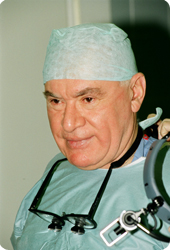
Leo A. Bockeria, MD, PhD, DSc, Professor, Academician of Russian Academy of Sciences, President of Bakoulev National Medical Research Center for Cardiovascular Surgery
Sort by
Ten-year experience in surgical treatment of carotid paragangliomas

Authors:
Company:
Bakoulev National Medical Research Center for Cardiovascular Surgery, Moscow, Russian Federation
E-mail: Сведения доступны для зарегистрированных пользователей.
DOI:
UDC: 616-006.488-089
Link: Clinical Physiology of Blood Circulaiton. 2025; 22 (4): 346-358
Quote as: Darvish N.A., Vasilkov A.S., Eseneev M.F., Shogenov M.A., Ivashchenko V.E., Valieva R.R., Svetlova N.Yu., Zavalikhina T.V. Ten-year experience in surgical treatment of carotid paragangliomas. Clinical Physiology of Сirculation. 2025; 22 (4): 346–285 (in Russ.). DOI: 10.24022/1814-6910-2025-22-4-346-285
Received / Accepted: 20.10.2025 / 17.11.2025
DownloadAbstract
Objective. To analyze the in-hospital and long-term results of surgical treatment of carotid paragangliomas over a ten- year period and summarize the department’s experience in preventing carotid artery prosthetic reconstruction and other adverse intraoperative events.
Study design – a single-center retrospective observational study.
Material and methods. Between 2015 and 2024, 18 patients with carotid paragangliomas underwent 19 surgical procedures at the Cardiovascular Surgery Department No. 6 of Bakoulev National Medical Research Center for Cardiovascular Surgery. The mean age of the patients was 62.8 ± 13.9 years (median 67; range 12–75); the gender distribution was equal.
According to the Shamblin classification, 4 patients (21%) had type I tumors, 12 (63%) – type II, and 3 (16%) – type III. Preoperative assessment included duplex ultrasonography of the brachiocephalic arteries, contrast-enhanced Multidetector CT angiography, and conventional digital subtraction angiography.
All patients underwent a longitudinal incision along the anterior border of the sternocleidomastoid muscle, followed by craniocaudal tumor mobilization with mandatory control of carotid artery segments not involved in the tumor process.
In 8 (42.1%) cases, the tumor was resected without manipulation of the carotid arteries; in 6 (31.6%) cases, arterial reconstruction was required; in 3 (15.8%) cases, a segment of the internal carotid artery was resected and an additional distal anastomosis performed; in 2 (10.5%) cases, carotid endarterectomy accompanied tumor resection. The Department’s consistent principle is the preservation of native vessels without prosthetic replacement.
Results. There was no in-hospital mortality. The median blood loss was 200 mL (range 100–1700), and the median operative time was 145 min (range 60–340). Postoperative cranial nerve pareses occurred in 57.9% of patients: tongue deviation – 3 cases, dysphagia – 3, mouth corner ptosis – 2, eyelid ptosis – 1, dysphonia – 10 cases. Ischemic cerebrovascular complications were observed in 1 case (5.3%) as a transient ischemic attack.
The mean blood loss was minimal in Shamblin type I tumors (100 mL), moderate in type II (492 mL), and highest in type III (1067 mL). Cranial nerve paresis occurred in 50% of type I and II cases and in 100% of type III cases.
During follow-up, overall mortality was 1 case (6%), unrelated to surgery, and 1 patient (6%) developed tumor recurrence 9 months after surgery. According to ultrasound follow-up, reconstructed carotid segments remained patent in all patients. Histomorphology examination revealed typical alveolar paragangliomas in most cases; in 10.5%, features of malignancy were detected, requiring further oncological supervision.
Conclusion. The Shamblin classification remains the key factor determining operative complexity and risk of intra- operative complications. The use of a craniocaudal dissection technique, meticulous vascular control, and avoidance of prosthetic grafting enable effective and radical tumor removal without perioperative mortality and contribute to favorable long-term outcomes.
About Authors
- Nidal A. Darvish, Cand. Med. Sci., Senior Researcher, Head of the Department; ORCID
- Artem S. Vasilkov, Cardiovascular Surgeon; ORCID
- Mussa F. Eseneev, Researcher, Cardiovascular Surgeon; ORCID
- Mukhamed A. Shogenov, Cand. Med. Sci., Researcher, Cardiovascular Surgeon; ORCID
- Vsevolod E. Ivashchenko, Researcher, Cardiovascular Surgeon; ORCID
- Ramilya R. Valieva, Researcher, Cardiologist; ORCID
- Natalya Yu. Svetlova, Cand. Med. Sci., Ultrasound Diagnostics Specialist; ORCID
- Tatyana V. Zavalikhina, Cand. Med. Sci., Chief Physician of Bakoulev Center for Cardiovascular Surgery, Cardiologist; ORCID
If you found mistakes, select text and press Alt+A