
Clinical Physiology of Circulation
ISSN 1814-6910 (Print)
ISSN 2410-9134 (Online)


Chief Editor
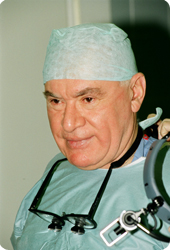
Leo A. Bockeria, MD, PhD, DSc, Professor, Academician of Russian Academy of Sciences, President of Bakoulev National Medical Research Center for Cardiovascular Surgery
Sort by
Comparison of hemodynamic parameters in early postoperative period using resection and creating artificial chords techniques caused by pos- terior mitral leaflet prolapse
Authors:
Company:
A.N. Bakoulev Scientific Center for Cardiovascular Surgery, Ministry of Health of the Russia, Rublevskoe shosse, 135, Moscow, 121552, Russian Federation
E-mail: Сведения доступны для зарегистрированных пользователей.
UDC: 616.422-007.2-089.168.1:612.13-07
Link: Clinical Physiology of Blood Circulaiton. 2016; 13 (1): 45-51
Quote as: Bel'skiy V.V., Muratov R.M., Sachkov A.S., Soboleva N.N., Fadeev А.А. Comparison of hemodynamic param- eters in early postoperative period using resection and creating artificial chords techniques caused by posterior mitral leaflet prolapse. Klinicheskaya Fiziologiya Krovoobrashcheniya (Clinical Physiology of Circulation, Russian journal). 2016; 13 (1): 45–51 (in Russ.).
Received / Accepted: 12.11.2015/02.02.2016
DownloadAbstract
Objective – to comparison of hemodynamic parameters in early postoperative period using resection and creating artifi- cial chords techniques caused by posterior mitral leaflet prolapse.Material and methods. In department from 2007 to 2013 162 operations were done: correction of severe mitral regurgi- tation due to various patologies. The immediate results were analyzed retrospectively in 48 patients. Patients were divided into 2 groups. In the first group resection technique was used (n=32) (quadratic resection of posterior mitral leaflet), and the second – creating artificial chords (n=16) (neochord creation using PTFE 4-0). Also, all the reconstructions included PTFE band annuloplasty (fixed length – 6 cm).
Results. Hospital mortality in the first was group was 3%, in the second were no deaths. In the first group 69% patients have no regurgitation or was trivial, first degree of regurgitation showed in 28%, and 3% have second degree. In the sec- ond group trivial regurgitation or its absence was detected in 82% of patients, first degree regurgitation was in 18% cases, there was no regurge in second group. Significant differences between the groups were detected comparing the mean transvalvular gradients. Compared with the preoperative indicators in the first and second groups showed a significant decrease in end-diastolic volume (EDV), reducing the size of the left atrium (LA), reducing also the diameter of mitral valve (MV) annulus. In the second group was significantly decreased ejection fraction (EF), in the first group there was no sig- nificant differences. There was no significant differences between the two groups in EF, EDV, the size of the LA, the diam- eter of MV annulus.
Conclusions. These methods both show good results, effectively correcting hemodynamics and reproduce as close as possible the normal blood flow through mitral valve.
References
1. David T.E., Ivanov J., Armstrong S., Christie D., Rakowski H. A comparison of outcomes of mitral valve repair for degenerative disease with posterior, anterior, and bileaflet prolapse. J. Thorac. Cardiovasc. Surg. 2005; 130: 1242–9.2. Gillinov A.M., Cosgrove D.M., Blackstone E.H. Durability of mitral valve repair for degenerative dis- ease. J. Thorac. Cardiovasc. Surg. 1998; 116: 734–43.
3. Suri R.M., Schaff H.V., Dearani J.A. Survival advan- tage and improved durability of mitral repair for leaflet prolapsed subsets in the current era. Ann. Thorac. Surg. 2006; 82: 819–26.
4. Seeburger J., Borger M.A., Falk V. Minimal invasive mitral valve repair for mitral regurgitation: results of 1339 consecutive patients. Eur. J. Cardiothorac. Surg. 2008; 34: 760–5.
5. Dreyfus G.D., Corbi P., Rubin S. Posterior leaflet preservation in mitral valve prolapse: A new approach to mitral repair. J. Heart Valve Dis. 2006; 15: 528–30.
6. Da Col U., Di Bella I., Bardelli G. Triangular resection and folding of posterior leaflet for mitral valve repair. J. Card. Surg. 2006; 21: 274–7.
7. David T.E., Bos J., Rakowski H. Mitral valve repair by replacement of chordae tendineae with polytetrafluo- roethylene sutures. J. Thorac. Cardiovasc. Surg. 1991; 101: 495–501.
8. Oppell U.O., Mohr F.W. Chordal replacement for both minimally invasive and conventional mitral valve sur- gery using premeasured Gore-Tex loops. Ann. Thorac. Surg. 2000; 70: 2166–8.
9. Kuntze T., Borger M.A., Falk V. Early and mid-term results of mitral valve repair using premeasured Gore- Tex loops (“loop technique”). Eur. J. Cardiothorac. Surg. 2008; 33: 566–72.
10. Муратов Р.М., Сачков А.С., Бабешко С.С., Соболе- ва Н.Н. Непосредственные результаты использова- ния полоски из ПТФЭ для аннулопластики мит- рального клапана. Грудная и сердечно-сосудистая хирургия. 2011; 6: 33–7. [Muratov R.M., Sachkov A.S., Babeshko S.S., Soboleva N.N. Early results of PTFE band annuloplasty of mitral valve. Grudnaya i Serdechno- sosudistaya Khirurgiya. 2011; 6: 33–7 (in Russ.).]
11. Carpentier A. Cardiac valve surgery – the «French cor- rection». J. Thorac. Cardiovasc. Surg. 1983; 86: 323–37.
12. Filsoufi F., Carpentier A. Reconstructive surgery in mitral valve disease. Semin. Thorac. Cardiovasc. Surg.
2007; 19: 103–10.
13. Perier P., Clausnizer B., Mistarz K. Carpentier «sliding
leaflet» technique for repair of the mitral valve: Early
results. Ann. Thorac. Surg. 1994; 57: 383–6.
14. Zussa С., Frater R.W., Polesel E., Galloni M., Valfré C. Artificial mitral valve chordae: Experimental and clini-
cal experience. Ann. Thorac. Surg. 1990; 50: 367–73.
15. Скопин И.И., Цискаридзе И.М., Спирин Л.В., Нерсесян И.Л., Акимов И.В., Мурысова Д.В. и др. Реконструкция митрального клапана с помощью создания множественных неохорд из нитей ePTFE. Грудная и сердечно-сосудистая хирургия. 2010; 4: 67–71. [Skopin I.I., Tsiskaridze I.M., Spirin L.V., Nersesyan I.L., Akimov I.V., Murysova D.V. et al. Mitral valve repair using multiple neohord of PTFE. Grudnaya i Serdechno-sosudistaya Khirurgiya. 2010; 4:
67–71 (in Russ.).]
16. Seeburger J., Kuntze T., Mohr F.W. Gore-Tex chordo-
plasty in degenerative mitral valve repair. Semin. Thorac. Cardiovasc. Surg. 2007; 19: 111–5.
If you found mistakes, select text and press Alt+A