
Clinical Physiology of Circulation
ISSN 1814-6910 (Print)
ISSN 2410-9134 (Online)


Chief Editor
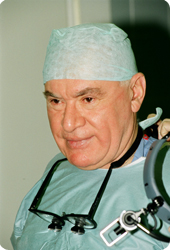
Leo A. Bockeria, MD, PhD, DSc, Professor, Academician of Russian Academy of Sciences, President of Bakoulev National Medical Research Center for Cardiovascular Surgery
Sort by
Successful hybrid intervention in a patient with critical lower limb ischaemia, chronic kidney disease and extended multilevel calcified occlusive lesions of the arteries of the lower extremities

Authors:
Company:
1 Bakulev National Medical Research Center of Cardiovascular Surgery, Moscow, Russian Federation
2 Dagestan State Medical University, Makhachkala, Russian Federation
E-mail: Сведения доступны для зарегистрированных пользователей.
DOI:
UDC: [616.137-005.4+616.61-002+616.137-005.63]-089
Link: Clinical Physiology of Blood Circulaiton. 2024; 21 (2): 140-147
Quote as: Arakelyan V.S., Musaev M.K., Musalov A.Yu., Surkhaev R.S., Magomedova B.A. Successful hybrid intervention in a patient with critical lower limb ischaemia, chronic kidney disease and extended multilevel calcified occlusive lesions of the arteries of the lower extremities. Clinical Physiology of Circulation. 2024; 21 (2): 140–147 (in Russ.). DOI: 10.24022/1814-6910-2024-21-2-140-147
Received / Accepted: 07.06.2024 / 24.06.2024
DownloadAbstract
Diseases of the arteries of the lower extremities and diabetes mellitus are currently important global problems. In cases where optimal medical therapy and exercise do not improve the symptoms of intermittent claudication, as well as in cases of ischemia that threaten limb loss, revascularization is the standard of care.
The article contains a description of the clinical case of a 75-year-old patient with critical ischemia of the lower limb (WIfI: 131) against the background of extensive multi-level occlusive, severely calcified lesions of the arteries of the lower limb (GLASS III) and severe concomitant pathology. The presence of CKD C.4 in the patient was a factor that increased perioperative risks and limited the use of iodine-containing contrast agent at the diagnostic stage and during intervention. Given the high risk of losing the lower limb within 1 year, a hybrid intervention was successfully performed. The treatment outcome confirms that the hybrid strategy is the treatment of choice in patients who are not suitable for open or endovascular methods as the sole treatment option.
References
- Song P., Rudan D., Zhu Y., Fowkes F.J.I., Rahimi K., Fowkes F.G.R. et al. Global, regional, and national prevalence and risk factors for peripheral artery disease in 2015: an updated systematic review and analysis. Lancet Glob. Health. 2019; 7: e1020–1030. DOI: 10.1016/ S2214-109X(19)30255-4
- 2017 ESC Guidelines on the Diagnosis and Treatment of Peripheral Arterial Diseases, in collaboration with the European Society for Vascular Surgery (ESVS). Russian Journal of Cardiology. 2018; 23 (8): 164–221. DOI: 10.15829/1560-4071-2018-8-164-221
- Gerhard-Herman M.D., Gornik H.L., Barrett C., Barshes N.R., Corriere M.A., Drachman D.E. et al. 2016 AHA/ACC guideline on the management of patients with lower extremity peripheral artery disease: a report of the American College of Cardiology/ American Heart Association Task Force on Clinical Practice Guidelines. Circulation. 2017; 135: e726–e779. DOI: 10.1161/CIR.0000000000000471
- Харазов А.Ф., Каляев А.О., Исаев А.А. Распространенность симптомной ишемии нижних конечностей в Российской Федерации. Хирургия. Журнал им. Н.И. Пирогова. 2016; 7: 58–61. DOI: 10.17116/hirurgia2016758-61
- Дедов И.И., Шестакова М.В., Майоров А.Ю. (ред.). Алгоритмы специализированной медицинской помощи больным сахарным диабетом. 11-й выпуск. М.; 2023.
- Armstrong D.G., Swerdlow M.A., Armstrong A.A., Conte M.S., Padula W.V., Bus S.A. Five-year mortality and direct costs of care for people with diabetic foot complications are comparable to cancer. J. Foot Ankle. Res. 2020; 13 (1): 16. DOI: 10.1186/s13047-020-00383-2.77
- Chaudery M.A., Patel S.D., Zayed H. Outcomes of open and hybrid treatments in below the knee pathology for critical limb threatening ischemia. J. Cardiovasc. Surg. (Torino). 2021; 62 (2): 111–117. DOI: 10.23736/S0021-9509.21.11654-4
- Мусаев М.К., Мусалов А.Ю., Ардавов А.М., Абдулманапов С.Т., Сурхаев Р.С. Успешная механическая реканализация и стентирование поверхностной бедренной артерии под контролем CO2-ангиографии у пациентки с хронической болезнью почек С4 А1. Сердечно- сосудистые заболевания. Бюллетень НЦССХ им. А.Н. Бакулева РАМН. 2022; 23 (5): 525–530. DOI: 10.24022/1810-0694-2022-23-5- 525-530
- Мусаев М.К., Мусалов А.Ю., Ардавов А.М., Сурхаев Р.С. Современные возможности CO2-ангиографии при критической ишемии нижних конечностей. Сердечно-сосудистые заболевания. Бюллетень НЦССХ им. А.Н. Бакулева РАМН. 2022; 23 (4): 420–428. DOI 10.24022/1810-0694-2022-23-4-420-428
- Mills J.L. Sr, Conte M.S., Armstrong D.G., Pomposelli F.B., Schanzer A., Sidawy A.N., Andros G. Society for Vascular Surgery Lower Extremity Guidelines Committee. The Society for Vascular Surgery Lower Extremity Threatened Limb Classification System: risk stratification based on wound, ischemia, and foot infection (WIfI). J. Vasc. Surg. 2014: 59 (1): 220–234.e1-2. DOI: 10.1016/j.jvs.2013.08.003
- Conte M.S., Bradbury A.W., Kolh P., White J.V., Dick F., Fitridge R. et al. GVG Writing Group. Global vascular guidelines on the management of chronic limb-threatening ischemia. J. Vasc. Surg. 2019: 69 (6S): 3S–125S.e40. DOI: 10.1016/j.jvs.2019.02.016
- Song P., Rudan D., Zhu Y., Fowkes F.J.I., Rahimi K., Fowkes F.G.R. et al. Global, regional, and national prevalence and risk factors for peripheral artery disease in 2015: an updated systematic review and analysis. Lancet Glob. Health. 2019; 7: e1020–1030. DOI: 10.1016/ S2214-109X(19)30255-4
- 2017 ESC Guidelines on the Diagnosis and Treatment of Peripheral Arterial Diseases, in collaboration with the European Society for Vascular Surgery (ESVS). Russian Journal of Cardiology. 2018; 23 (8): 164–221. DOI: 10.15829/1560-4071-2018-8-164-221
- Gerhard-Herman M.D., Gornik H.L., Barrett C., Barshes N.R., Corriere M.A., Drachman D.E. et al. 2016 AHA/ACC guideline on the management of patients with lower extremity peripheral artery disease: a report of the American College of Cardiology/ American Heart Association Task Force on Clinical Practice Guidelines. Circulation. 2017; 135: e726–e779. DOI: 10.1161/CIR.0000000000000471
- Kharazov A.F., Kalyev A.O., Isaev A.A. PAD prevalence in Russian Federation. Pirogov Russian Journal of Surgery. 2016; 7: 58–61 (in Russ.). DOI: 10.17116/hirurgia2016758-61
- Dedov I.I., Shestakova M.V., Mayorova A.Yu. (Eds.). Algorithms for specialized medical care for patients with diabetes mellitus. 11th issue. Moscow; 2023 (in Russ.).
- Armstrong D.G., Swerdlow M.A., Armstrong A.A., Conte M.S., Padula W.V., Bus S.A. Five-year mortality and direct costs of care for people with diabetic foot complications are comparable to cancer. J. Foot Ankle. Res. 2020; 13 (1): 16. DOI: 10.1186/s13047-020-00383-2.77
- Chaudery M.A., Patel S.D., Zayed H. Outcomes of open and hybrid treatments in below the knee pathology for critical limb threatening ischemia. J. Cardiovasc. Surg. (Torino). 2021; 62 (2 ): 111–117. DOI: 10.23736/S0021-9509.21.11654-4
- Musaev M.K., Musalov A.Yu., Ardavov A.M., Abdulmanapov S.T., Surkhaev R.S. Successful mecha-nical recanalization and stenting of the superficial femoral artery under the control of CO2-angiography in a patient with chronic kidney disease C4 A1. The Bulletin of Bakoulev Center. Cardiovascular Diseases. 2022; 23 (5): 525–530 (in Russ.). DOI: 10.24022/1810-0694-2022-23-5-525-530
- Musaev M.K., Musalov A.Yu., Ardavov A.M., Surkhaev R.S. Modern possibilities of CO2-angiography in critical lower limb ischemia. The Bulletin of Bakulev Center. Cardiovascular Diseases. 2022; 23 (4): 420–428 (in Russ.). DOI: 10.24022/1810-0694-2022-23-4-420-428
- Mills J.L. Sr, Conte M.S., Armstrong D.G., Pomposelli F.B., Schanzer A., Sidawy A.N., Andros G. Society for Vascular Surgery Lower Extremity Guidelines Committee. The Society for Vascular Surgery Lower Extremity Threatened Limb Classification System: risk stratification based on wound, ischemia, and foot infection (WIfI). J. Vasc. Surg. 2014: 59 (1): 220–234.e1-2. DOI: 10.1016/j.jvs.2013.08.003
- Conte M.S., Bradbury A.W., Kolh P., White J.V., Dick F., Fitridge R. et al. GVG Writing Group. Global vascular guidelines on the management of chronic limb-threatening ischemia. J. Vasc. Surg. 2019: 69 (6S): 3S–125S.e40. DOI: 10.1016/j.jvs.2019.02.016
If you found mistakes, select text and press Alt+A